Fake Charity Nerd Girl

resist microstructural oppression

Posts tagged #goodreads

worldoptimization
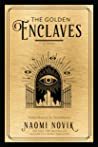
Source URL: https://64.media.tumblr.com/f3ad0d0f9380fb41a7528b958d9e8224/694ba9bd15ff190d-a2/s540x810/3a7648aa634adda1ac8e9418b175cf795ff89709.jpgThe Golden Enclaves by Naomi Novik
My rating: 3 of 5 stars

A pretty good conclusion to the series.

Biggest pro was the resolution of mysteries/open questions from the first two books. It wrapped everything up in a way that felt very satisfying.

Biggest con was … I think I felt less bought into the ethics of the story than I had for the previous two books?

The first two books often have a vibe of “you can either do the thing that’s easy and safe or you can do the thing that’s hard and scary but right, and being a good person is doing the right thing.” And I’m super on board with that.

Whereas if I had to sum up the moral message of the third book I might go with “there is no ethical consumption under late capitalism.” It turns out the world economy is built on systemic exploitation of the vulnerable, and everyone who participates in it is complicit, and the way to be a good person is to burn the system to the ground and replace it with one that’s less problematic even if it requires a substantial decrease in global standards of living.

And like I think that’s likely true in the Scholomance universe? But I think it’s a bad analogy for the real world. And I think it makes for less satisfying conflict: I’d much rather see El wrestling with her own worst impulses than El being self-righteous at anyone who isn’t vegan eco-friendly fair trade strict mana.

View all my reviews
worldoptimization
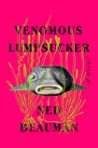
Source URL: https://64.media.tumblr.com/f228f7aaf78c0a767c97868c3e4bc6ae/de85abfd02309a58-ba/s540x810/99a8926004db43e05da5ecc675b2d81441252741.jpgVenomous Lumpsucker by Ned Beauman
My rating: 3 of 5 stars

I read this, because apparently I’m an insufferable finance bro who gets my fiction recommendations from Matt Levine.

It was a bit too annoying about hitting you over the head with “climate change is bad” for me to really love it.

But given that, it was pretty clever and fun. Might recommend if “novel about rogue trader short selling extinction credits” sounds like your thing.

View all my reviews
worldoptimization
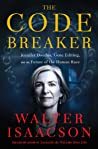
Source URL: https://64.media.tumblr.com/636e2166042d02039e052963ebdb4851/bf1bbfc305af3b39-74/s540x810/8b6e5041846928f27c3cbaa288972e6383529fb6.jpgThe Code Breaker: Jennifer Doudna, Gene Editing, and the Future of the Human Race by Walter Isaacson
My rating: 3 of 5 stars

Walter Isaacson previously wrote biographies of Steve Jobs and Leonardo da Vinci, and while I haven’t actually read them this is an interesting counterpoint to what I imagine them to be.

There’s this cultural trope of a lone genius: someone who sees in visionary ways others don’t, probably male, probably a difficult and flawed person. That’s what we often expect to read about when we read a book about a groundbreaking scientific advance. And this is not that.

Jennifer Doudna is honestly kind of boring? Which is probably a good thing! Most of my friends would probably come across as kind of boring in a biography. She seems like a very smart, driven, accomplished person who is thoughtful and reasonable and works well with others. Which makes reading about her not that interesting. Some of the most fun passages of the book were about James Watson, who is a flawed and polarizing weirdo–I walked away feeling pretty compelled to read his memoir The Double Helix. But also, it seems good and valuable to have depictions of normal and boring people (and yep women) making scientific breakthroughs, because that is a thing that happens and is good to model.

This book combined a bunch of threads, so I’ll rate the different components separately.

depiction of the process of biology research: A

I thought this was a good and cool look into “how do scientific advances happen on a fairly micro level”: everything from appointments and labs to journals and peer review to getting a sense of how discoveries build off each other.

actual science: B+

I got a somewhat better understanding of the science behind CRISPR.

Doudna biography: C+

Boring, as discussed.

ethics: C-

A lot of inconclusive waffling about “hmm, what if you could use CRISPR to make people taller … would that be ethical though …”

Some takeaways from this book:
- It does feel like the landscape of funding for bio research isn’t super efficient and is quite reliant on grants.
- It was interesting to realize the extent to which scientists felt driven to self-regulate here. They were also way quicker and more on the ball than the government, unsurprisingly. I think it made me update toward “having scientific regulation done by/in collaboration with scientists is good,” though there are obviously strong conflicts of interest that mean other stakeholders should have a say as well.
- Jennifer Doudna is like the only native born American in this book. Immigration is important, man.
- Patents are kind of a mess and we should probably give them out less for stuff like this. I feel like the extra incentive for their work that Doudna, Feng Zhang, et al might have gotten was more than outweighed by the energy that went into arguing about patents.
- A lot of important shit happens when people meet IRL.
- Isaacson keeps repeating that biotechnology is the next information technology. I believe it at least somewhat: it does sound like it’s been advancing really fast over the past decade or so and is going to keep doing that.

View all my reviews
worldoptimization
Source URL: https://64.media.tumblr.com/bfdfc4ad8e0619b53e78d924992437fa/e7be76e8c7476cda-9b/s540x810/b14da08ae600fb6fc35160b5b875c8497f30d330.jpgPiranesi by Susanna Clarke
My rating: 4 of 5 stars

I loved Jonathan Strange and Mr Norrell. But I put off reading this for a while, out of some combination of fear of it disappointing in comparison and lack of interest after reading a description and the first few pages.

I finally read it today and it was great.
- surprisingly a page-turner; the unfolding mystery draws you in and I basically didn’t put it down until I finished
- the worldbuilding was beautiful and haunting
- felt quite nostalgebraist-esque. also reminded me of The Astonishing Life of Octavian Nothing
- I was assuming it would be super long like JS&MN; instead it felt perfectly concise, like it took exactly as long as it needed to tell the story


View all my reviews
worldoptimization
Source URL: https://64.media.tumblr.com/f0054841907ae4e8abba6eda0493f819/07b37ba67600b0af-70/s540x810/e0d08e51aa841d1305aeced865ef48dc36a0b9dc.jpgThe Last Graduate by Naomi Novik
My rating: 3 of 5 stars

A lot of people are super into this series so I decided to try it. I didn’t like book 1 that much, but for some reason I decided to read book 2 anyway and got pretty into it.

I think my initial issues, which improved as the series went on, were:
- annoying main character/narrator
- shallow characterization

but there was a lot of stuff I liked that became more prominent.

- Conflicts/motivations/treatment of morality: villains are those who do the wrong thing because it is easy and tempting in a relatable way, heroes are those who (not unconflictedly) decide to do what is hard but right.

- Rationalficness/characters being smart and agentic.

- The worldbuilding/general invitation to imagine what social norms would be like in a society with a really different set of constraints: I don’t know if I believe what she comes up with (are human societies ever that low-trust/uncooperative/transactional, even in super extenuating circumstances?), but it’s fun to think about anyway.

- The romance becomes less grating: not so into “loser emo girl + super hot himbo,” but more here for “two most talented students in the year, who share the responsibility of keeping everyone else safe, and are both kinda fucked up.”

- If you’ve always thought “okay Hogwarts is cool but don’t tell me there aren’t zillions of super talented Chinese kids trying to get in, and British parents trying to maintain the status quo where they are overrepresented for historical reasons, and don’t tell me this doesn’t degenerate into wizard battles, where are the wizard battles over this” then you are like me and this is the book for you.

View all my reviews
worldoptimization
worldoptimization
Source URL: https://64.media.tumblr.com/855fcb317a22054f2203b6dfdea79f55/ec244447a2f81579-f4/s540x810/bfea13d568c4bd598c51161f5f028e90f21ee737.jpgOne Billion Americans: The Case for Thinking Bigger by Matthew Yglesias
My rating: 4 of 5 stars

I’ve been enjoying Matt Yglesias’s substack for a while, but didn’t get around to reading this until now, because the premise sounded kind of boring at first or something.

But reading it I was basically like “okay, I’ve never fully thought through this before but now that I do it all just seems clearly right and it’s crazy that More People Aren’t Talking About This.”

The basic argument:
- it is better for the US to be the most powerful country in the world than for China or India to be
- there’s various second-order factors that go into this but the biggest thing is: how big is your economy
- at current trends China will overtake the US soon (or maybe has already done so depending on how you define things)
- growing the economy faster is hard and growing faster than China is near impossible given that the difficulty of growing increases as GDP per capita gets higher
- trying to make China poorer would be very bad from a humanitarian perspective
- otoh growing the US economy by increasing the number of people would not be that hard and we’re not really trying to do it

Not that any of this is the most important thing, but as opposed to other important things which are often weird and unpopular this seems like it should be popular, because most people in both parties want America to be great and don’t want China to become more powerful than us.

I guess people just intuitively have some weird Malthusian zero-sum mentality where more people -> less for us. You see it on the right when people worry about immigrants taking jobs, and on the left when people say that having kids is bad for the environment. When like, having more people also creates all kinds of positive externalities for other people that I guess are less intuitive.

Maybe the most striking illustration of this was a quote from a Trump official on immigration: “Why do we need more people? For the extra traffic congestion? More crowded classrooms? Longer emergency room and TSA lines?”

It’s interesting that the founding fathers didn’t fall into this trap even though their pre-Industrial Revolution world was in reality way more Malthusian than ours. Thomas Jefferson said, “the present desire of America is to produce rapid population by as great importations of foreigners as possible”; it seems like they mostly thought that increasing our population was important to the long-term security and prosperity of America.

View all my reviews
worldoptimization

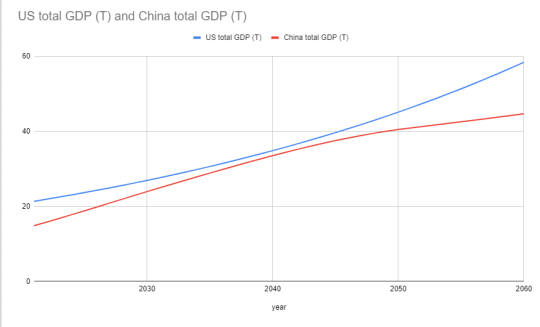
some numbers, because I was kinda unsatisfied with the lack of numbers here:

  • the US population is currently growing at a rate of 50 bps/year or so
    • this breaks down into: +1.2% from children
    • -1% from deaths
    • +30 bps from net immigration
  • China’s population is also growing at a similar rate but their population growth rate is plummeting and if current trends continue they are expected to start shrinking soon
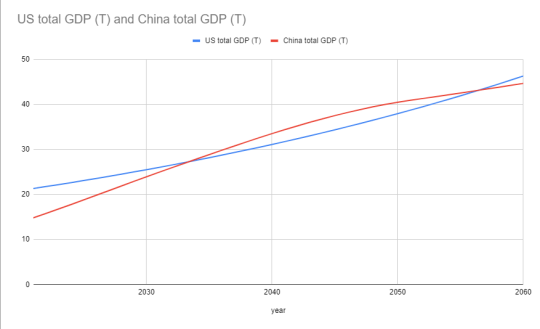
  • seems like China’s GDP is likely to get at least close to ours in the net 10 years but looks neck and neck after that: they’d prob still be growing faster per person than us but maybe outweighed by shrinking population
  • if Americans started having the number of kids they say they want rather than the number of kids they actually have, we could more than double our population growth rate to 1.1%
  • this would mean a ~20% bigger population by 2050: 450m vs current projected 380m
  • but obviously would take at least 20 years before these kids start becoming economically productive
  • we could get the same level of growth with people who are immediately economically productive by letting in 3x as many immigrants as we do currently: from 1m/year to 3m/year
  • this would make our rate similar to Canada’s
  • the majority of our immigrants are people with family in the US: we have roughly the same rate of those as Canada relative to population
  • refugees are a pretty small group of both: the main difference is in economic immigrants. we accept fewer than Canada despite having 9x the population
  • we could potentially increase immigration way more than that: apparently 150m people worldwide say they would immigrate to the US if they could
  • but doing a lot more than 3m/year seems kinda risky/experimental 

so Not an Economist but some toy graphs I made with numbers I googled:

current projections:

Source URL: https://64.media.tumblr.com/8be458c5df3c2f575b0c4f96fba7203e/cf3ed747594dfa3b-ec/s540x810/a088e41fa9de71d81d337a01cdf018721b69dd69.png

with 3x current immigration levels:

Source URL: https://64.media.tumblr.com/6bb7dacc846ab91bedab98c4f75058d3/cf3ed747594dfa3b-e4/s540x810/907cc0d82c62a083ce53ed73bc1b377018b80983.png
worldoptimization
Source URL: https://64.media.tumblr.com/855fcb317a22054f2203b6dfdea79f55/ec244447a2f81579-f4/s540x810/bfea13d568c4bd598c51161f5f028e90f21ee737.jpgOne Billion Americans: The Case for Thinking Bigger by Matthew Yglesias
My rating: 4 of 5 stars

I’ve been enjoying Matt Yglesias’s substack for a while, but didn’t get around to reading this until now, because the premise sounded kind of boring at first or something.

But reading it I was basically like “okay, I’ve never fully thought through this before but now that I do it all just seems clearly right and it’s crazy that More People Aren’t Talking About This.”

The basic argument:
- it is better for the US to be the most powerful country in the world than for China or India to be
- there’s various second-order factors that go into this but the biggest thing is: how big is your economy
- at current trends China will overtake the US soon (or maybe has already done so depending on how you define things)
- growing the economy faster is hard and growing faster than China is near impossible given that the difficulty of growing increases as GDP per capita gets higher
- trying to make China poorer would be very bad from a humanitarian perspective
- otoh growing the US economy by increasing the number of people would not be that hard and we’re not really trying to do it

Not that any of this is the most important thing, but as opposed to other important things which are often weird and unpopular this seems like it should be popular, because most people in both parties want America to be great and don’t want China to become more powerful than us.

I guess people just intuitively have some weird Malthusian zero-sum mentality where more people -> less for us. You see it on the right when people worry about immigrants taking jobs, and on the left when people say that having kids is bad for the environment. When like, having more people also creates all kinds of positive externalities for other people that I guess are less intuitive.

Maybe the most striking illustration of this was a quote from a Trump official on immigration: “Why do we need more people? For the extra traffic congestion? More crowded classrooms? Longer emergency room and TSA lines?”

It’s interesting that the founding fathers didn’t fall into this trap even though their pre-Industrial Revolution world was in reality way more Malthusian than ours. Thomas Jefferson said, “the present desire of America is to produce rapid population by as great importations of foreigners as possible”; it seems like they mostly thought that increasing our population was important to the long-term security and prosperity of America.

View all my reviews
worldoptimization
Source URL: https://64.media.tumblr.com/28770b28d28bae1a3767821a2405495d/bf5d24068aff8fe6-63/s540x810/5125d3fc33e7a7c04368fbe12ed54ac78d6cd99e.jpgMoody Bitches: The Truth About the Drugs You’re Taking, The Sleep You’re Missing, The Sex You’re Not Having, and What’s Really Making You Crazy by Julie Holland
My rating: 2 of 5 stars

I picked this up in a bookstore despite low expectations because I was interested in the topic, and I think it managed to somewhat exceed them.

The thesis is roughly: women tend to be different from men as a result of our differing hormone balances (and other factors both biological and cultural, but we’re focusing on the hormones here).

We tend to be:
- better at communication
- more empathetic
- more sensitive, with stronger emotions, more frequent mood changes, and lower tolerance for physical pain
- more conflict-averse, making us better at conflict resolution

These things are natural and fine, but they get stigmatized and medicalized by our patriarchal society, leading to the higher rates of depression and anxiety diagnoses in women. Medications, particularly hormonal birth control and SSRIs, can basically smooth women’s hormonal fluctuations and blunt our sensitivity, at the cost of the upsides.

She offers anecdotes such as a patient who called her crying from work asking to up her SSRI dose. When she dug into the reason why, she found out that the patient’s boss had yelled at her in front of a group of people and she had been embarrassed to break down crying. Instead of increasing the dose the patient agreed to talk to her boss and ask him to bring up issues more respectfully and privately.

My takes on all of this:
- I’m not sure how much I trust any of the science. I was expecting Cosmo-level and I think it was decently better than that: there was plenty of “well some studies on this show X, but others find no effect,” and despite the initial impression of anti-SSRI, anti-HBC polemic her actual view seems to be “these medications are super useful for lots of patients and I prescribe them often, but the effects vary by patient, many have negative reactions, and on the margin I think they’re overused.” nonetheless I’d take all the studies cited with a grain of salt
- a lot of the conclusions ended up being pretty boring “exercise and sunlight are good for you and have fewer side effects than SSRIs” type stuff
- the more interesting conclusions were stuff like “stress is a natural response to high pressure situations and isn’t in itself bad: it only becomes bad if you believe that it’s bad” (supposedly there were some studies showing this idk)
- I am kinda intrigued/convinced by the main thesis: I think to some extent I perceive a male-typical emotional range as “normal” and worry that deviations from that make me “crazy” or “too emotional” when it’s actually fine
- I felt unsatisfied by the conclusions though and ended up wanting more: like what does accepting that anxiety or mood swings are natural and okay look like, exactly?

Other random notes:
- It portrays estrogen as feel-good and progestin as depressing. Is this right? If so should we be more wary of progestin-only birth control?
- I liked the paean to crying: “Crying allows us to deeply feel what we’re feeling and then move on. It is a crescendo that naturally leads to a denouement of intensity. For most women, this depth of feeling is a birthright … have you ever noticed how often women apologize for crying? In part it’s because men are uncomfortable with expressed emotion, and so they, and we, have been socialized to shut it down.” It also points out that since men are a lot worse at identifying emotion than women, crying is practically useful since it’s the clearest signal men have that a woman is upset.

View all my reviews
worldoptimization
Source URL: https://64.media.tumblr.com/4e092a9f68ee9a895ff772b2d11d7e5c/7ed6b8304d6f4da2-88/s540x810/a1d3cee4108494e91f9653370457556de2addd5c.jpgGuns, Germs, and Steel: The Fates of Human Societies by Jared Diamond
My rating: 4 of 5 stars

I’m not sure how much to trust this book. My evaluation of the actual claims ranged from “state of the art then but science has progressed now” to “totally reasonable (but don’t have independent verification)” to “… come on.”

That said, I thought it was great and would totally recommend it.

For one, I found it very readable with lots of fun anecdotes that are great for cocktail parties.

For another, I really liked his approach and just felt like he was asking the right questions, you know? with each new section and chapter I kept finding myself going “oh yeah, that’s exactly what I was wondering about.” He has maps and tables cataloguing the various independent inventions of agriculture and writing, which I just happened to be curious about and had been trying to haphazardly piece together in a google doc before I picked up this book. And reading his epilogue I felt sort of gleeful imagining how pissed off any historian reading it must be but also just kinda endorsed it.

I used to think of history and anthropology as sort of fundamentally non-scientific fields: just collecting anecdotes trying to tell you what happened, or what something is like. But I’ve gotten way more into them as I’ve realized their potential to actually explain things in a way that allows you to make falsifiable predictions. I don’t think that’s what most of those fields actually do, and it seems really hard compared to doing the same thing in science, but it totally seems like what they should be going for.

(Not that I think Diamond is a perfect practitioner of this or anything. The length at which he managed to discuss the domestication of plants and animals while totally refusing to consider the role that different environments and selective pressures might have played in the evolution of different human groups was honestly impressive.)

View all my reviews
worldoptimization
Source URL: https://64.media.tumblr.com/f30fed6a80d534f1b599c2220a593e67/c39ca401b7a8eff2-61/s540x810/671203224080c2e3c75d146b878df630b33c23f1.jpgThe WEIRDest People in the World: How the West Became Psychologically Peculiar and Particularly Prosperous by Joseph Henrich
My rating: 4 of 5 stars

This is a sort of broad and ambitious book. The author is an anthropologist and one of the people who coined the term WEIRD (western, educated, industrialized, rich, democratic) to describe the populations most psychological studies are done on. The book covers:
- a review of the literature on cross-cultural psychological differences
- a review of the anthropological research on how cultural norms evolve and how they interact with people’s psychology
- the author’s theory of how WEIRD societies ended up being so unusual and successful, tracing back to the marriage- and family-related policies of the Catholic Church in the medieval era.

I found it super interesting and compelling. My favorite things:

For one, I’d heard the term WEIRD, and I knew about some studies showing cross-cultural psychological variation. But actually system-1 understanding that not everyone thinks like me seems really hard, and really important. Tbh I already have enough trouble with the fact that other people in my very specific subcultures sometimes think in different ways from me. But did you know non-WEIRD people:
- don’t experience the endowment effect
- give very little to the other person in the ultimatum game (and are totally fine with being given very little)
- don’t show much correlation between happiness and self-esteem
- have less differentiated personalities? (ie the Big 5 doesn’t apply, there are fewer than 5 factors)

For another, his picture of history through the lens of cultural evolution made a lot of things click: it felt like trad done right. What drew me to trad thinking was that it seemed to get a lot of things right that most people around me would frustratingly miss; I’d hear lots of people criticizing organized religion, or monogamy, or something, without ever seeming to reflect on how long it had existed, or how successful and prevalent it was throughout different human societies, and wonder why.

This book asks why, and comes up with answers: organized religion and monogamy were both hugely important to the success of earlier human societies, and those that had them outcompeted those that didn’t. But it also doesn’t stop there: modern WEIRD culture, which promotes lots of things like “individualism” and “innovation” and “questioning tradition” is the most successful culture in history. I ended up with a feeling of smug superiority to parochial traditionalists; as an unmarried, childless woman residing halfway across the world from my family, with an individualist psychology, a high level of market integration, and strongly universalist, utilitarian beliefs, I’m actually at the apex of Western civilization: the true successor to a thousand years of Western tradition from Charlemagne through the Enlightenment to today.

View all my reviews
worldoptimization
Source URL: https://64.media.tumblr.com/fbf827b6219fb11c3afafa6915c69e23/d4f60290d0e28ea5-84/s540x810/1ab817a05d2b69e1da0c07aefb3da4c33c47a9ff.jpgWhen I Say No, I Feel Guilty: How to Cope - Using the Skills of Systematic Assertive Therapy by Manuel J. Smith
My rating: 2 of 5 stars

I read this book after Anna Salamon recommended it, because it aligned nicely with my current interest in assertiveness (what is it? is it good? should I do it and if so how?)
Overall it was 1) kind of boring and repetitive and 2) painfully 70s, but maybe had some good points?

I’m often skeptical when people talk about being assertive: I think I feel like it might lead to lots of trouble/conflict, and I don’t feel sold on why it’s important or necessary. I’m the kind of person who, if I go to a restaurant and the waiter gets my drink order wrong, I never complain. People sometimes say I should, and I’m like … why? Idk, this drink is fine too?

The (I guess obvious now I think about it) answer this book gives is that it’s not about the drink, it’s about your self-respect. If you have a strong sense of self-worth, if you believe that you aren’t responsible for other people’s feelings and don’t need to justify your actions to anyone, then you can safely do things like compromise, or put others’ needs before your own because you want to. But it has to be done from a place of self-respect.

(Being unassertive doesn’t just mean always doing what other people want you to do: the book posits that the alternative to being assertive is often being “manipulative:” taking actions in an attempt to get others to meet your needs without being willing to openly and unapologetically express them.)

I guess this is just something like a meditation on boundaries, fully generalized. If you don’t want to have sex with someone, and you believe that your preferences are valid, and don’t require any justification or excuses, and you feel comfortable expressing them … well, then maybe you can reasonably decide to have sex with them anyway because their preference is stronger than yours and you want to make them happy. But in the absence of all that you just end up in that shitty place where you don’t feel that you have the right to enforce your own boundaries, and you have to constantly choose between ignoring your own needs and invalidating others’.

How do you tell the difference? I’m still confused about that part. I’ve been aware of this general concept for a long time (“a meditation on boundaries” is five years old), but I think I’ve still done plenty of the second thing while telling myself it was the first (“it’s not that I don’t have the right to do what I want here … but they do make some valid points … and it doesn’t really seem worth it to make a thing out of it just from a cost-benefit analysis perspective …”) So yeah, I still feel unsure about that.

(Reading this in an era where the Karen has obtained such cultural prominence is also … interesting … a lot of the content on women asserting themselves that was presumably kinda radical in the 70s feels positively problematic now. You want us to ask to speak to the manager??)

View all my reviews
worldoptimization
Source URL: https://64.media.tumblr.com/908caba08ef14ff22a9cef408b39cfe0/2cd67ec3fc2510fc-86/s540x810/3dd1b369f542af29eeea131b88be48a65ada711f.jpgA Vast Conspiracy: The Real Story of the Sex Scandal That Nearly Brought Down a President by Jeffrey Toobin
My rating: 3 of 5 stars

I picked this up because I liked two of this other books; on the OJ Simpson trial and on Patty Hearst. This one made less of an impression on me, partly just because I knew more of the history already, but it still had many of the same things to recommend it.

I was thinking while reading it about what motivated me to, when eg I still have no idea what the Mueller Report is or what it says. My patience for learning about current events is selective, and for better or for worse I tend to be more driven by the meta level; not by the events, but by people’s reactions, and the narratives that spring up, and the way opinions form.

Looking at events from a historical perspective, even if it’s only with the benefit of a few years, often feels like a better way to do that. And this book works as a chronicle of that sort of metanarrative on multiple levels. On one, it’s a lot of what Toobin focuses on; the blurring lines of public and private life, the changing landscape of attitudes toward sexual behavior, the burgeoning role of the internet in disrupting traditional media. And on another, of course the book itself is a document of its time and often seems to be jarringly missing the point to a reader in the #MeToo era, and has been updated with an introduction apologizing for as much.

Yeah idk, I appreciated that approach to having written a book that is now sort of irredeemably problematic. I can only hope that in another 20 years there will be another introduction apologizing for the ways this introduction was terrible in ways we can’t even anticipate yet.


View all my reviews
worldoptimization
Source URL: https://64.media.tumblr.com/4bffbcb10c7f6c2af75163f1ad2a7fba/6ac373b03547e142-37/s540x810/7b023cc0a9a2498c568f9215deb8f9b54b7ace17.jpgWho We Are and How We Got Here: Ancient DNA and the New Science of the Human Past by David Reich
My rating: 4 of 5 stars

This was an excellent glimpse into a field I don’t know much about: sometimes I’ll see an article in some media about Neanderthal DNA or something, but I don’t have enough context to really get what’s going on. This book was an enjoyable way to get all that context; would recommend.

I didn’t really realize this before reading it, but it sounds like ancient DNA is a pretty exciting and fast-growing field; it’s just in the last decade that we’ve made enough technological advances to do whole-genome sequencing on ancient human remains, and we’ve gotten a way better understanding of human history from doing this. Tbh it made me kind of jealous: it feels like this is one of those moments where there’s a lot of low-hanging fruit and you don’t actually have to be that smart or lucky to significantly improve our understanding of early human history.

So yeah, read this to learn about:
- interbreeding with archaic humans
- agriculturalists and steppe pastoralists in Europe
- the Indus Valley civilization and its fall
- Indian caste division and endogamy
- the tribes in the Amazon who are related to Australian aborigines
- sex-asymmetric mixing between populations
etc. It’s cool.

I guess this also made me feel like I had a better overall picture of human population history, which is something like: there’s a family tree that splits and branches off, as you’d imagine. Sometimes those branches end up as hunter-gatherers on random islands and do their own thing for thousands of years. But a lot of the time the branches continue to intermingle, one of them develops some new technology or something and conquers another, then they interbreed and produce a new population, and so on.


View all my reviews
worldoptimization
Source URL: https://64.media.tumblr.com/72bcb8d91e45ab70b802ba947ec9102a/308767cbdaed2a95-3c/s540x810/78500f1f3f978c71a17a72530187b32eaa4b045c.jpgThe Doomsday Machine: Confessions of a Nuclear War Planner by Daniel Ellsberg
My rating: 5 of 5 stars

Man, this was so good.

The first impression it left me with was: Daniel Ellsberg is so cool.

The second impression was: I guess a lot of my friends, and people who tend to share my political views, are pacifist-leaning and oppose the national security establishment and such. And I’ve never felt that confident that they’re right. “War is bad, killing people is bad” just seems like such an obvious, dumb take that the people who are against that must have good reasons. I can imagine what some of them might be: it does seem legitimately better to have a world under US influence than Russian or Chinese. And probably a lot of the good reasons people have for doing stuff are classified.

And The Doomsday Machine left me with the very strong impression that nope, there are no wise and thoughtful leaders behind the scenes making all the right decisions on national security. Actually, a lot of our plans and strategies and doctrines are not only based on disregard for non-American life and for future generations, but are just … dumb? They’re the product of incompetence and bureaucratic infighting and make no sense under any value system.

Anyway, it was all pretty scary, and I felt kind of amazed that we’re all still alive.

View all my reviews
worldoptimization
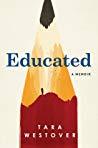
Source URL: https://64.media.tumblr.com/61fc34abde365a92f6d4827a0bf25abc/bd944b84bb656741-d4/s540x810/19d2157c2f0e435f733f107724ced3d3cd1ae654.jpgEducated by Tara Westover
My rating: 4 of 5 stars

Mostly it was a really interesting, couldn’t-put-it-down memoir by a person who had a really different life from me.

It also makes you think, per the title, about education, its purpose, etc. The author and two of her brothers ended up with PhDs after having received zero formal schooling before college, and obviously they seem pretty smart and impressive otherwise they wouldn’t have been able to do it, but also it does make you think about why exactly all that K-12 education was necessary. Sure, they had some catching up to do, but they basically managed. Tara self-studied enough trig to get into college, struggled through her college math requirements but passed them, and then never needed advanced math again in her life.

It makes it pretty clear that the real point of K-12 education is socializing kids. The stuff Tara was missing wasn’t stuff like “how to read and analyze a text” (she taught that to herself, as a kid, reading the Bible). It wasn’t anything you need for any job. It was basically all “how to be normal and fit in” in one guise or another, from how to dress to what the Holocaust was and what to say if it comes up in conversation.

And it ultimately made me feel some pretty strong pro-public-school feelings. Certainly most people are wrong about most stuff. But if whatever crazy ideas you’re trying to inculcate in your children can’t survive a little jostling in the marketplace of ideas, that really doesn’t seem like a good sign.

View all my reviews
worldoptimization
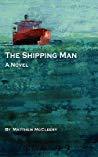
Source URL: https://64.media.tumblr.com/cd09fae978f1466609993afc7d4cb829/6a8176aa97b9b2fb-fa/s540x810/3ab7a2e8cce300a6a01015116bf525b9f0bd4f43.jpgThe Shipping Man by Matthew McCleery
My rating: 4 of 5 stars

This is described as a “thriller,” and I want to be clear that this is only accurate to the extent that you find high-yield bond offerings thrilling. At one point Somali pirates briefly enter the picture, but they are quickly dispatched with offscreen to make way for a plot thread about European regulators disputing the marking of some of a bank’s underwater loans.

Overall I really enjoyed it; the writing was awful, but it was a totally fun way to learn about the economics of the shipping industry. This genre should really be more of a thing.

View all my reviews
worldoptimization
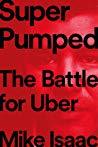
Source URL: https://64.media.tumblr.com/01914981edfa3bfc61926eb138452da0/e109b6c83307f9b6-c4/s540x810/442bb59cb75e3b364857a05e1241f998f62d95c6.jpgSuper Pumped: The Battle for Uber by Mike Isaac
My rating: 3 of 5 stars

It was a pretty fun read, and there were lots of good anecdotes.

I thought it landed too far on the judgmental side, though; it didn’t editorialize a ton, but I basically got the sense that the author thinks obviously Uber shouldn’t have done all the stupid shit that it did.

As a result, I never really felt like it got into what I think is the most interesting part of all this: what should Uber have done in order to maximize its market cap?

Sure, they’ve done lots of horrible and embarrassing things. But they’ve also created a shitton of value, and genuinely made the lives of lots and lots of people better and more convenient, and probably a lot of that is thanks to aspects of their hard-charging bro culture or whatever. At the same time, a lot of the PR stuff has been expensive, and I’m sure they haven’t made the exact right decisions along the way.

Idk, it’s easy to point to individual dumb things, like they shouldn’t have gone to that KTV, and the whole leather jacket debacle. But to avoid all those little things, you need the sort of cautious HR-conscious culture that one imagines might have legitimately hindered their growth. And then there’s things like Greyball, which feels more like a conscious decision that could have been altered, but also it seems like it was pretty helpful and I don’t think the consequences have been that negative so far.

Anyway, I guess this is all hard to answer. This book provided some decent case studies, though.

View all my reviews
worldoptimization
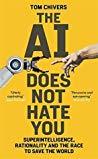
Source URL: https://64.media.tumblr.com/793da13ce937c797afab38ddeddcc28c/302119d7f7fce186-fc/s540x810/f00294df01649751f7d1d1fd279e960dfbd21d25.jpgThe AI Does Not Hate You: Superintelligence, Rationality and the Race to Save the World by Tom Chivers
My rating: 3 of 5 stars

Man, if you had told me a couple years ago that a Buzzfeed writer would write a popular book on AI risk and the rationalist movement, and my main complaint would be that it wasn’t sensationalist enough, I would have been very confused. But here we are.

The author seems like a really nice and reasonable person, who thinks AI risk might be important and wants to understand and explain it. But mostly it seems like most rationalists were reasonably pretty wary of talking to a journalist, so he didn’t get much unfiltered content from them. So the book ends up being largely a summary of the Sequences and some other rationalist ideas, with a few interviews thrown in. Which is cool, the ideas are the important part, but if you really want the ideas you can just read the Sequences. (Though this is a nicely digestible version of the highlights.) I think the book just needed him to go undercover to about three really crazy rationalist parties.

I did like the chapter at the end where he does internal double crux with Anna Salamon; it felt very true.

View all my reviews
worldoptimization
Source URL: https://64.media.tumblr.com/b7aff4092773d55e691d9e61ec872c02/aadb9857835d79b7-91/s540x810/5107067d890233e20c3e91f0f4cb509005dab1c3.jpgHeloise and Abelard by Étienne Gilson
My rating: 3 of 5 stars

Man, I’m just so into Heloise.

- She was really into Stoicism, and I think she actually just embodied the philosophy of the Stoics in a really cool way–she has this quality of self-awareness, and accepting things as they are, while still striving for demanding ideals.
- She doesn’t want to get married, because she thinks marriage would compromise Abelard’s work and integrity–instead, she argues for being his mistress.

“God knows I never wanted anything from you but yourself … No doubt the name of wife is stronger and more sacred, but I have always preferred that of mistress, or if you will pardon me for saying it, concubine and prostitute.”

- She combines an unconditional and irrevocable love for Abelard with a total willingness to argue with him, be disappointed in him, or call him out on his bullshit.

“Concupiscence rather than friendship bound you to me, the ardor of desire rather than love. This is no personal judgment, my beloved, this is the judgment of everyone … I wish I were alone in thinking so, because if anyone could justify you, it would relieve my sorrow.”

- She is totally frank about the fact that she spends Mass having sexual fantasies about Abelard instead of praying.

“The pleasures of lovers which we have tasted together have been so sweet that I cannot despise them nor even efface their memory without great difficulty … It is not until the time of Mass, when prayer should be purest, that the obscene imagining of these pleasures so completely overwhelms my poor soul that I yield to their shameful delectation rather than to prayer.”

- She doesn’t expect to go to heaven, despite leading what seems to be an admirable life as a nun, because she became a nun for Abelard rather than for God, and she will never forgive God for causing Abelard to be castrated.

View all my reviews
worldoptimization
Source URL: https://64.media.tumblr.com/9cc12d7d1beab205f0d9e3e51cb40d45/0700219f87a43185-7b/s540x810/47f6900f17b45e0f51728c0eb7412b38d1158a03.jpgUndaunted Courage: The Pioneering First Mission to Explore America’s Wild Frontier by Stephen E. Ambrose
My rating: 4 of 5 stars

One thing I really liked about this book was getting a sense of what America was like before white settlement: the natural (herds of bison roaming the Great Plains) and the anthropological. I somehow had a very binary idea that there was Native American civilization before vs after European contact, so it was interesting to see the ways the cultures interacted and coexisted over centuries. Some of the tribes Lewis and Clark came into contact with might never have seen white men, but their lives were still totally different because of things they did: the Spanish introduction of horses to the continent, trade routes involving British and French fur trappers, the spread of disease.

Reading it gave me some respect for cultural evolution-type stuff–like yep, Native American tribes really just figured out how to thrive in their environment in a way that’s pretty hard for a bunch of white guys figuring it out from first principles.

I picked this up because I wanted to read about people doing hard things, and it pretty much delivered. It sounds like the expedition was really hard and in most worlds wouldn’t have succeeded; they only made it through a combination of luck and actually being super prepared and making mostly quite good decisions. (I get weirdly anxious about packing for trips and have a lot of dreams about not having enough time to pack, forgetting to pack something, etc. so packing for a 2-year-long trip where you have to carry everything you pack but also you die if you run out of something is uh yikes.)

The weird thing about humans, though, is that they can be so good at doing hard things but they can also be so bad at doing easy things. Lewis commanded an expedition through unknown territory across America and did a really good job, but then when he got back he procrastinated horribly on publishing his journals, somehow totally failed to pick up any women despite being a national hero, became an alcoholic and opiate addict, and committed suicide.

View all my reviews
worldoptimization
Source URL: https://64.media.tumblr.com/49e2165b5d67ecf9e8d54a6564ea89a5/f183b440e41409ef-d1/s540x810/01bbf86628aa5369cdca557ab150a8b6ebd02dc7.jpgRich People Problems by Kevin Kwan
My rating: 2 of 5 stars

In general I found the second and third books kind of tedious and repetitive after the first one–just piling on more and more rich people and absurd ways to spend money.

What I did think was interesting was–I think Piketty says something about how Austen and Balzac mention specific sums of money, and clearly delineate their characters’ financial situations, in a way that literature never does today. That’s something I appreciate when reading older books: you can often get a sense of the economy, and how that works, and everyone’s roles in it, and a bunch of stuff that contemporary fiction seems more divorced from. So yeah, I do like something about how these books engage with material reality.

View all my reviews
worldoptimization
Source URL: https://64.media.tumblr.com/62fc4cd6a3f328b1a068b2dd1aa1f237/tumblr_inline_prhjbbIvFa1sfizxi_540.jpgBarbarians at the Gate: The Fall of RJR Nabisco by Bryan Burrough
My rating: 5 of 5 stars

It was a bit slow for the first 100 pages or so, but once it got into the actual story I couldn’t put it down. It was dramatic, and informative, and helped crystallize a lot of things I’m confused about, like:
- How do companies work? Like in basic economics, you think about market participants each trying to maximize their profits, and everyone acting in their own interest ends up maximizing total welfare, and that makes sense in a zoomed-out way, and as far as I can tell is not a crazy model of the behavior of companies. But how do companies end up behaving this way?

My very uninformed impression of how companies work is something like:
- there is a CEO, who is a guy
- there is a board, consisting of a bunch of guys who are friends with the CEO
- they all have fiduciary duties and if they fail to meet them they will get yelled at by a judge in Delaware
- ???
- shareholder value gets maximized

This book was simultaneously scary and reassuring on this topic, portraying people’s incentives as pretty far from aligned with economic efficiency. This is scary, for obvious reasons. But also reassuring, because it’s kind of relatable. Money is nice, but it’s so abstract; it’s some numbers on a piece of paper. I’m way more motivated by things like revenge, or the desire to prove that I was right, or making guys think I’m attractive, or getting nice articles written about me in the newspaper, or expensive perks. (You can buy perks with money, but it’s not really the same if you have to buy it yourself.)

And so is everyone in this book, and it is reassuring that the whole system seems to kinda work anyway.

- Finance: good or bad? And how do you tell?

The book doesn’t really explore this that much, and most of the anti-LBO voices have dumb moralistic objections. But it does kind of feel like whenever you package and reallocate some risk, there is some tradeoff in which you might be increasing systemic risk but it’s opaque and hard to measure.

Anyway, it was great, and if you are like me you will find a lot of intensely relatable moments, e.g.

“The initial projections they had obtained from RJR Nabisco was a heading ‘other uses of cash.’ Beside it was a row of figures stretching out ten years, each year ranging from 300 to 500 million dollars. Was it cash flowing in or out? Should he add it? Subtract it? Ignore it?”

View all my reviews
worldoptimization
Source URL: https://64.media.tumblr.com/18ea22697fa96b40af9dbae7ec56b9c2/tumblr_inline_ppmm2qB0Oq1sfizxi_540.pngWorth the Candle by cthulhuraejepsen
My rating: 5 of 5 stars

It took me a really long time to get into this–like, 200,000 words. It starts out as not terribly interesting self-insert RPG fantasy; the magic was all pretty run-of-the-mill, I didn’t like the protagonist, and the other characters all seemed one-dimensional and tropey.

But like. It gets really good. I’m not sure how intentional the beginning was–like maybe on some level it was supposed to be kind of a boring level 1 D&D adventure? But as it goes on you get:
- excellent magic and worldbuilding (what would you do with the ability to edit souls? or a library that contains all books that will ever be written?)
- lots of fun meta-narrative deconstructiony stuff
- really good characters and interpersonal dynamics. Gradually the characters move from tropey to real and fully fleshed out and it just feels like, yes, these are exactly the dynamics you’d expect to come up when you have a small group of really different people trying to save the world together.

View all my reviews
worldoptimization
Source URL: https://64.media.tumblr.com/5c0f83e4fc98ce2aca54b3b4a76972d2/tumblr_inline_ppbmmsdL7c1sfizxi_540.jpgMiddlemarch by George Eliot
My rating: 5 of 5 stars

It’s been famously called “one of the few English novels written for grown-up people.” I’m not grown up yet, in that sense–I’m young enough that my life still stretches out before me with boundless possibility, having yet to reach the age where constraint after constraint, however gladly assumed at the time, imperceptibly narrows the space of our potential lives until we realize that the better part of our obituary is written and the remaining variations minor.

I’m not there, but George Eliot made me feel keenly how circumscribed the lives of men and women are, whether by wealth, sex, class, social standing, or their own failings; or by those more elusive barriers that go by names like “honor” and “duty.” I don’t want to make you think this is a sad book; on the contrary, one cannot but be struck by the morbid beauty in respecting these circumscriptions.

I think those who are skeptical of old books might find less to find fault with here; the values of the protagonists are hard to criticize, and Dorothea’s and Lydgate’s dilemmas seemed shockingly modern to me. Who hasn’t had a bunch of money and been frustrated to find that there isn’t a book that just tells you what the best way to donate it is–or fantasized about reforming the medical profession only to run into entrenched interests trying to maintain the status quo–or wanted to do important research but you know it’s just so hard to find the time–or thought that surely the best way to do good must be to marry a great man and aid him in his works? (read the book to find out how that one works out)

View all my reviews
worldoptimization
Source URL: https://64.media.tumblr.com/07c2fe2ca0eec13811ae54f66c554b3e/tumblr_inline_po8orlHx7P1sfizxi_540.jpgAttached: The New Science of Adult Attachment and How It Can Help You Find—and Keep—Love by Amir Levine
My rating: 4 of 5 stars

I really liked this book, sort of in spite of myself. I’m sure none of the studies will ever replicate, but as far as Hogwarts house systems/bullshit models for thinking about relationships go I think it’s pretty good.

Probably the best thing was just listing a bunch of common cognitive distortions regarding relationships, which I read and was like “oh yeah I totally have some of those, good call.” Would recommend if you’re interested in finding ways that your thinking about relationships is fucked and trying to fix it.

View all my reviews
worldoptimization
Source URL: https://64.media.tumblr.com/b5abc094914ec4d2f736f8ee02019bdc/tumblr_inline_pki9fzXu7O1sfizxi_540.jpgNonviolent Communication: A Language of Life by Marshall B. Rosenberg
My rating: 5 of 5 stars

I honestly loved this book. I think I might have gained 10 emotional IQ points just from reading it–this week whenever I interact with people I keep thinking about what they must be feeling and what need they were trying to express when they said that thing. (I think I still have a way to go before actually putting all of this into practice.) I’m also finding it quite helpful in thinking about myself, my self-image, my decisions and mistakes, etc.

I’d recommend it if you’re interested in relating more authentically to people, resolving disagreements, making people feel loved and valued, practicing compassion for others and yourself … basically normal human things tbh.

I’m still unsure about some stuff. There were a lot of really impressive stories about NVC healing decades-old rifts, preventing murders, etc. Maybe they’re all true, but I’m pretty sure it isn’t literally a superpower and I would feel better if there were some stories about “one time I tried to use NVC to stop this gang war, and it totally failed, and they kept murdering people, and we had to just put them in jail or something.”

I’m also confused about people having needs that conflict with each other. He kind of casually implies that everyone’s needs can always be satisfied and that seems fake. Maybe I missed him justifying this more.

View all my reviews
worldoptimization
Source URL: https://64.media.tumblr.com/eeeac577ab04871477125b067a5febf2/tumblr_inline_pki8glfZ8K1sfizxi_540.jpgThe Mind-Body Problem by Rebecca Goldstein
My rating: 2 of 5 stars

There was a thing I was hoping this would express and it basically didn’t.

I read it at the same time as rereading Middlemarch, thinking that there would be connections but imagining them to be more subtle. As it was, I read of Renee’s disappointing Roman honeymoon right after Dorothea’s, and thought that reading the newer book might have been superfluous.

I can see my best qualities in Dorothea; I can see my worst ones in Renee, and that’s what makes reading about her so excruciating–I hate her but kind of sympathize with her but want to distance myself from her as far as possible in a “not like other girls” sort of way.

Overall I found it predictable, tedious, very confused about philosophy, and totally missing out on the fact that there are beautiful and good things in the world in a disturbing way. Obviously I would say that, because of the above, so take it with a grain of salt.


View all my reviews
worldoptimization
Source URL: https://64.media.tumblr.com/9da9a97102e49ca3a2ac34d4b05cd7ab/tumblr_inline_pjluxlP1Y71sfizxi_540.jpgA Suitable Boy by Vikram Seth
My rating: 5 of 5 stars

To not review this work in verse
Would feel impertinent, or worse.
Its rhyming couplets always charm
As do its warmth and depth disarm.
For now I live my life in prose,
Trapped in the cells of spreadsheet rows.
To read a novel of this hue
Can somehow make my soul feel new.
Humans exist, and they have minds
And hearts of countless different kinds.
And if you’re longing to explore,
This book has what you seek and more.

View all my reviews
worldoptimization
Source URL: https://64.media.tumblr.com/1ef306ad7ee23bb978a61217181ad940/tumblr_inline_pgc6lgOHEe1sfizxi_540.jpgModels: Attract Women Through Honesty by Mark Manson
My rating: 3 of 5 stars

I didn’t really find it to be anything groundbreaking, probably because I’ve spent a lot of time reading dating advice and already distilled the best parts for myself (esp. Andrew Aitken who cites Manson and whose shtick is basically “Mark Manson for women”)

I thought it was basically good though and would recommend it as a dating 101 guide for men. (It’s possible you should read PUA stuff first as this is basically a reaction to PUA. Also possible you shouldn’t, since being exposed to it at all might just be negative for a lot of men.)

(in case it’s confusing: my star ratings are kind of personal and based on my experience. I gave this three stars because I don’t think reading it significantly affected my life in any way, nor was it an intensely enjoyable experience. I’d give it five stars on the scale of “usefulness/correctness relative to other dating advice for men”)

View all my reviews
worldoptimization

Source URL: https://64.media.tumblr.com/d85ecb1f0e1ff86f74fd38f390204e95/tumblr_inline_pfqlerNVeA1sfizxi_540.jpgGone with the Wind by Margaret Mitchell
My rating: 5 of 5 stars

I’ve read Gone with the Wind before. I first read it in middle school, I think; I reread it a few times in high school but I would stop after “as God is my witness I’ll never be hungry again” because I got too upset at the second half. In college I went through a phase of watching the ending to the movie over and over to make myself cry, in a sort of weird cathartic urge.

I had a sudden impulse to reread it the other day and I’m not sure exactly what was going on in my subconscious but man it feels really relevant.

Some thoughts:

I. Maybe I should read more novels. There’s something so spiritually rewarding about seeing someone’s private thoughts laid completely bare–it makes one feel less alone, like the world is filled not with p-zombies but with other entire people.

Scarlett isn’t introspective. She’s like the least emotionally intelligent person on the planet. She avoids thinking about unpleasant things and doesn’t tell hardly anyone what she’s actually thinking, except sometimes Rhett. It feels incredibly lonely to be in her head, walling off huge parts of herself from the world and even from herself. Maybe she should have read more novels.

II. It’s interesting how the novel can treat the flaws of the main characters with such compassionate understanding and then the characters who are black or white trash or Yankees just … nope.

It’s interesting how strong the instinct is to sympathize with the downtrodden people under an occupying military government. I mean, it’s basically the Hunger Games, if you ignore slavery. (Scarlett is Katniss, Gale is Ashley? Think about it.)

III. Scarlett isn’t admirable; she’s shallow, self-absorbed, petty, and cruel. She likes ballgowns and barbecues and beaux. And then shit goes down and she realizes she has something to protect and she does whatever it takes to do that and ugh that is awesome and I have so many feelings about this.

The passage that struck me most on this reread was:

Oh some day! When there was security in her world again, then she would sit back and fold her hands and be a great lady as Ellen had been. She would be helpless and sheltered, as a lady should be, and then everyone would approve of her. Oh, how grand she would be when she had money again! Then she could permit herself to be kind and gentle, as Ellen had been, and thoughtful of other people and of the proprieties, to. She would not be driven by fears, day and night, and life would be a placid, unhurried affair. She would have time to play with her children and listen to their lessons. There would be long warm afternoons when ladies would call and, amid the rustlings of taffeta petticoats and the rhythmic harsh cracklings of palmetto fans, she would serve tea and delicious sandwiches and cakes and leisurely gossip the hours away. And she would be so kind to those who were suffering misfortune, take baskets to the poor and soup and jelly to the sick and “air” those less fortunate in her fine carriage. She would be a lady in the true Southern manner, as her mother had been. And then, everyone would love her as they had loved Ellen and they would say how unselfish she was and call her “Lady Bountiful.”

Her pleasure in these thoughts of the future was undimmed by any realization that she had no real desire to be unselfish or charitable or kind. All she wanted was the reputation for possessing these qualities. But the meshes of her brain were too wide, too coarse, to filter such small differences. It was enough that some day, when she had money, everyone would approve of her.

Some day! But not now. Not now, in spite of what anyone might say of her. Now, there was no time to be a great lady.


IV. When I was younger, I remember feeling much more frustrated at Scarlett. I was mad that she was a neglectful mother and now I’m like “well, she has lots of responsibilities, kids are a lot of work, idk.” I was upset at her for using convict labor; now I’m like “sure, tradeoffs, running a business is hard, it’s not any worse than slavery.” I couldn’t wait for her to get over Ashley already and now I’m like “sure why not have a ten-year-long emotional affair with Ashley Wilkes, seems fun.” I’m not sure if this says good or bad things about me.

View all my reviews
worldoptimization
Source URL: https://64.media.tumblr.com/a1966092010b621026cfb2644a16f2eb/tumblr_inline_p7rn1g6OZk1sfizxi_540.jpgGolden Hill by Francis Spufford
My rating: 5 of 5 stars

Gosh, this book was just delightful to read. Every sentence was just [gesticulates excitedly].

This was not at all intentional but I ended up reading it at the same time as Digital Gold: Bitcoin and the Inside Story of the Misfits and Millionaires Trying to Reinvent Money and I highly recommend the synergies if you have ever wanted to walk around all day with your head filled with money and trust and distributed ledgers.


View all my reviews
worldoptimization
Source URL: https://64.media.tumblr.com/62270c09bfb3dbe32b100e06838a1008/tumblr_inline_p7rn1g4qT21sfizxi_540.jpgBeyond the Breakup: Understanding Your Ex-Boyfriend from The Male Perspective by Andrew Aitken
My rating: 4 of 5 stars

Here are some reasons not to read this book:
* It makes a lot of broad generalizations about gender. If you are allergic to that this is not the book for you. If you are relatively gender nonconforming, said generalizations will likely not apply and so this is probably not the book for you. In particular, if you are not a straight, monogamous woman looking for a committed relationship this is probably not the book for you.
* It contains very little in the way of scientific evidence. If you don’t want to read one random guy’s thoughts on relationships and absorb them through the epistemic filter that that implies, this is probably not the book for you.

All that said, I found myself nodding furiously and highlighting lots of passages, so you know, take from that what you will.


View all my reviews
worldoptimization
Source URL: https://64.media.tumblr.com/f38478db33ccbe48044e397af7905418/tumblr_inline_p7rn1grE9I1sfizxi_540.jpgInadequate Equilibria: Where and How Civilizations Get Stuck by Eliezer Yudkowsky
My rating: 4 of 5 stars

I ended up liking this book a lot, and more than I was expecting at first.

The first three chapters didn’t really say anything I don’t already believe and hadn’t already thought about a reasonable amount, but they were a clear and entertaining presentation of the material. The last four chapters were basically a thoughtful examination of why people hate Eliezer and why he thinks that those people are wrong. I’m not sure if I agree with everything in them–I think that I think it’s harder to choose between disagreeing experts in fields in which you are not expert than he thinks it is. (I agree that if you can just try, and make bets, and see if you’re right, and update, that’s good. I think there are a lot of cases where it’s just hard to do this.) But I think being skeptical of reasoning motivated by status-regulating emotions is an important and good thing (for me personally, at least) to do.

If you like Eliezer, you’ve probably read this book already. If you hate Eliezer, I think you should read this book, and if you still hate him at the end then you can give up. If you don’t know who Eliezer is, probably don’t read this book and read Slate Star Codex instead.

View all my reviews
worldoptimization

Source URL: https://64.media.tumblr.com/b7d59cf801000d514bee9d5c3538cc53/tumblr_inline_p7rn1gL4o01sfizxi_540.jpgBachelor Nation: Inside the World of America’s Favorite Guilty Pleasure by Amy Kaufman
My rating: 3 of 5 stars

I learned plenty of interesting tidbits that I promptly regurgitated to a friend later that day. Like did you know that Des was living paycheck-to-paycheck while on the Bachelor and had to ask producers to pay her rent? Or that Sean, having last-minute doubts, barged into Catherine’s room while she was wearing teeth whitening strips the night before the proposal to ask her if she would accept a life centered around Christ?

But I think it ultimately failed to deliver on its implicit promise–explaining just, why? Why do we all watch it and why can’t we stop? Why does such an ordinary and, honestly, boring show seem to encapsulate everything that matters in 2018 America?

If you know of a book that answers that, let me know.

View all my reviews

worldoptimization
Source URL: https://64.media.tumblr.com/d5043f0195256b34df0a30ac249432f4/tumblr_inline_p7rn1ghzFm1sfizxi_540.jpgFascinating Womanhood by Helen B. Andelin
My rating: 2 of 5 stars

Not many positive things to say about this book.

For one, I picked it up kind of expecting it to be about femininity in general. It turned out to be more of a marriage advice book, which is fine, but not really relevant to me. I was more interested in femininity in relation to family, friends, etc.

For another, I felt like the tone of the book just made the ideas seem unappealing, and in some cases, had the opposite of the intended effect. Like, being a housewife sounds pretty fun in a lot of ways. I enjoy cooking, cleaning, and taking care of children. I find domestic and caring tasks pretty fulfilling. If you wrote a book that was like “hey here’s a cool hip subversive idea … have you ever thought about … being a housewife?” I would be all over it. “You should feel bad for having a job” … not so much. Maybe this is just a fact about my psychology.

But I think my main objection is really that … okay, this is a marriage advice book that is anti-divorce and doesn’t really say anything about the kind of crucial step of picking a husband. So it ends up coming off as a collection of cheat codes, accompanied by testimonials from women along the lines of “my husband was unemployed/alcoholic/abusive/just kind of a dick, and I tried these cheat codes, and now he is super nice and randomly buys me jewelry!” And like I guess it’s interesting to know that if I find some random loser on the street and promise to never question his judgment and obey him in all things, he will be really nice to me and always remember my birthday. But I don’t actually feel any motivation to do that.

Here are some anecdotes from this book, just because they’re fun.

- A woman wanted her husband to join her religion, so she invited some missionaries over for dinner. This caused her husband to become so upset that he went to the bathroom, climbed out the window, and disappeared for three days (??). She promised to never mention religion again. This led him to secretly convert to said religion and surprise his wife by showing up to church one day (?).

- A woman was married to a man who smoked, which she insisted she do outside to avoid exposing her to secondhand smoke. After learning from FW that she should accept him as he is, she apologized and asked forgiveness. Her husband told her that he loved her for the first time in two years (??).

- A woman was married to a man who spent all the money he earned on himself and always said he wanted nothing left over for her when he died (??). After she started following the principles of FW, he paid off their mortgage and started saving money for her.

- A woman’s husband continually made comments to his bachelor friends about how marriage was a trap and they should avoid it. This made her upset, so she invoked the FW principle of “childlike anger,” stomping her foot and yelling at him. He apologized to her (his first apology in eight years of marriage(?)) and remembered her birthday for the first time a couple months later (?), even getting her a card. He is now a model husband, including staying by her side during an emergency C-section despite not being able to stand sickness.

Anyway, you get the point. There is a steelman version of this book about, like, sexual dimorphism and the role that power differentials play in many people’s psychology and the ways that social changes over the past several decades have fucked with that and the value of introspecting about one’s preferences w.r.t. all this. But I think to most smart women in 2018, the idea that you should reset the power balance in your relationship by unilaterally giving up your power is not going to seem that appealing.

View all my reviews